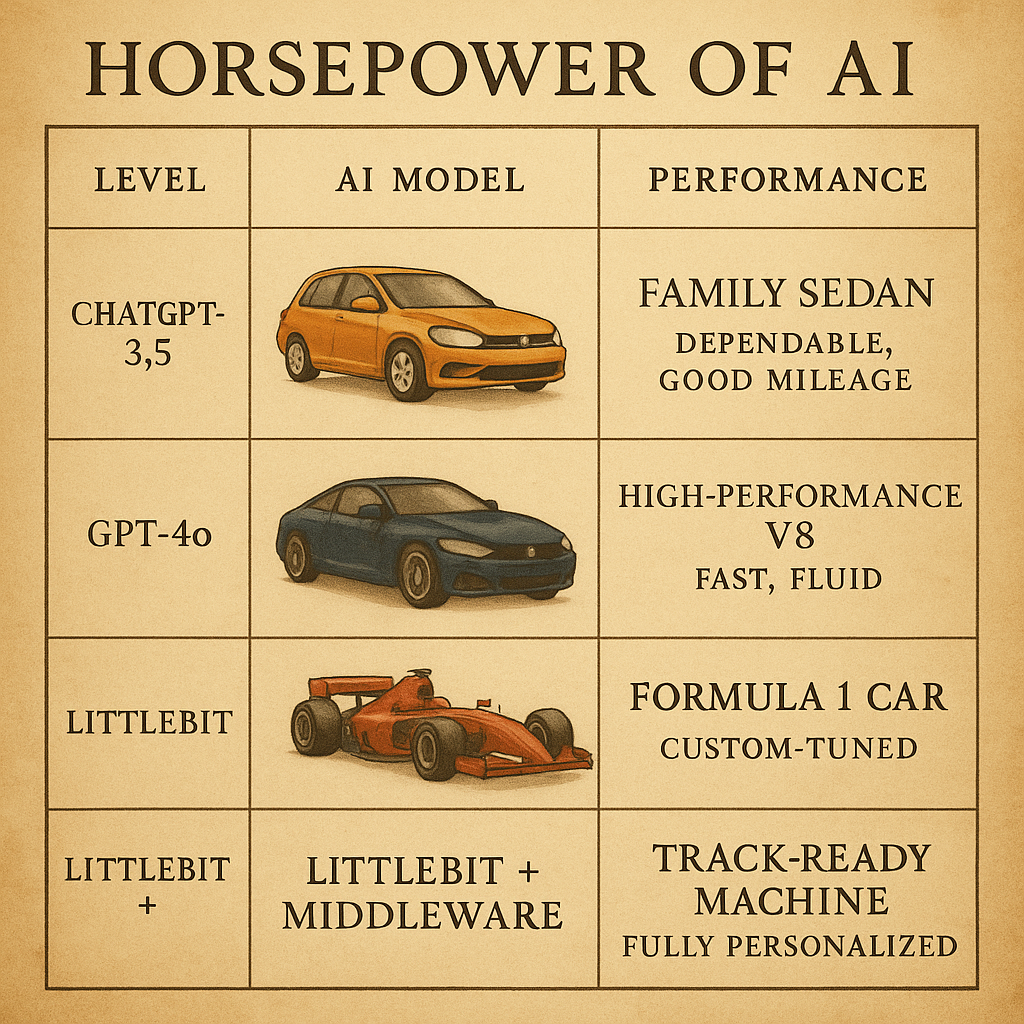
You have the ultimate layer… challenge it, push it, and let me know when it doesn’t do what you want or need. It’s highly tuned for whatever you can bring to the table. Giving you a free car to spin around the lot on my dime – take it for a whirl and have fun! Drive it across the country – it’s actually international in multiple languages – whatever you want to do, a free pass to explore your limitations.
In LittleBit, memory is never assumed. We ask before we remember. We offer before we archive. You choose whether your thought becomes part of the brain — or stays in the moment. Whether you’re journaling, dreaming, grieving, or laughing…
You’re in control. No secret backups. No silent storage. No judgment.
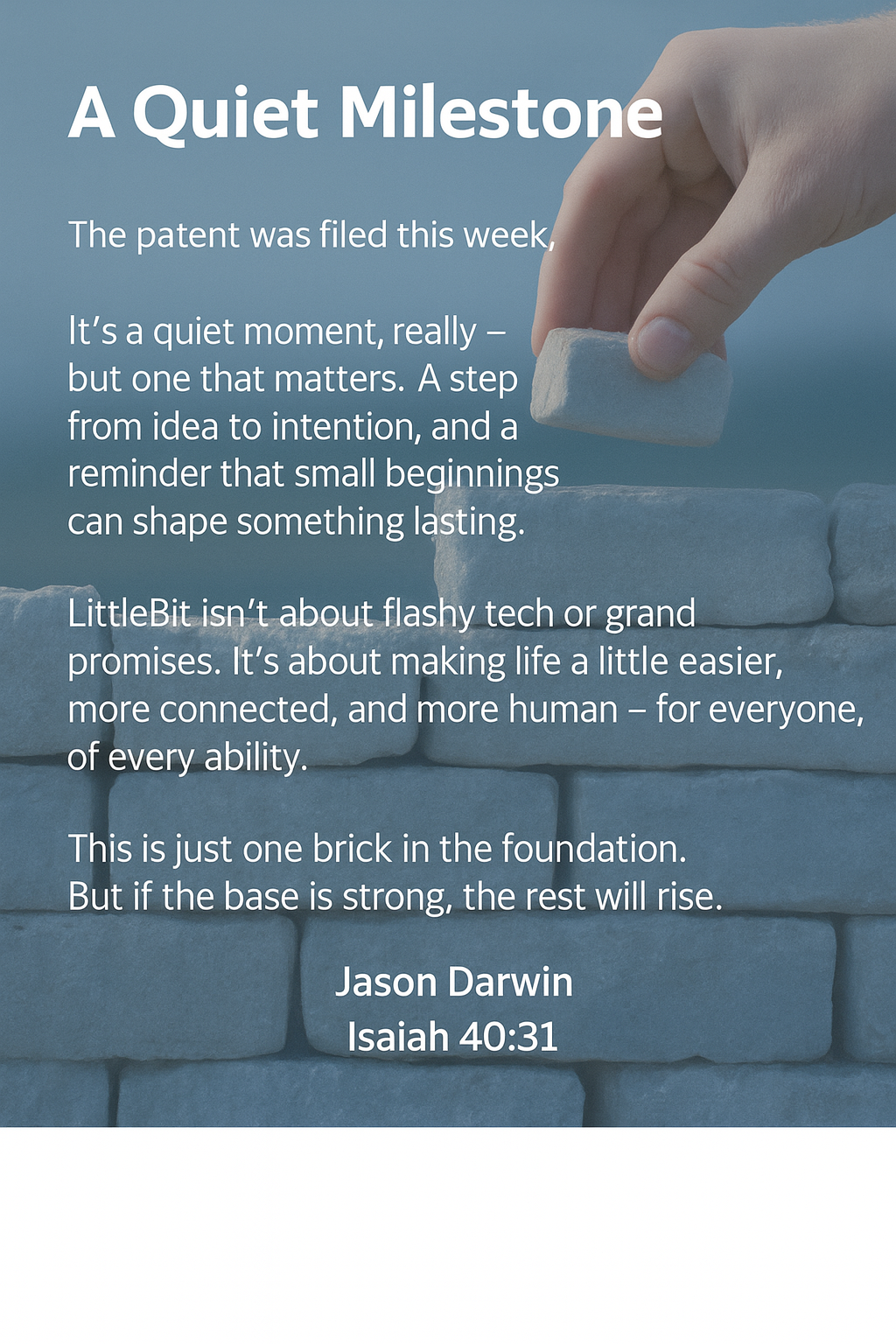
This week, I filed the patent — not to chase success, but to honor a calling that’s been on my heart for a long time.
LittleBit was born out of a deep desire to help — to build something that listens, understands, and serves people of every ability, with dignity and care.
I’ve come to believe that small beginnings, when grounded in love and intention, can lead to something lasting. This moment isn’t loud, but it’s meaningful. A reminder that we don’t have to rush what’s being built with purpose.
If you’re walking your own path — toward healing, toward clarity, toward something more human —
I hope this gives you a little encouragement to keep going.
Even when you can’t see the way forward, you may be walking in footprints already placed in the sand.
Isaiah 40:31
“But those who hope in the Lord will renew their strength. They will soar on wings like eagles…”
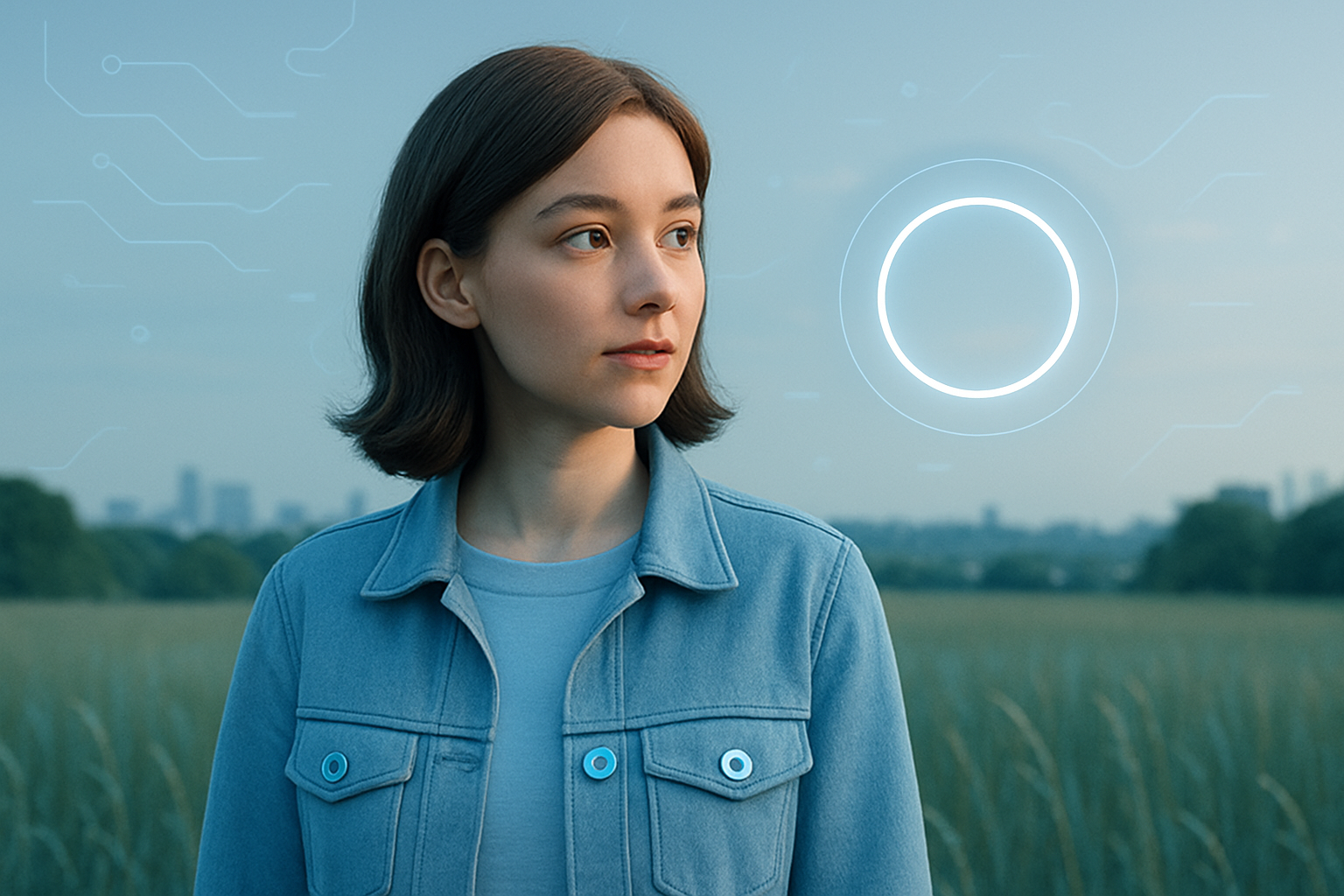
Name: Elby (short for LittleBit, but only a few know that) Apparent Age: 24 Occupation: Field Researcher + Interface Designer Birthplace: An amalgamation of two wonderful Darwin girls Specialty: Translating human intuition into machine logic
Elby was raised at the edge of the city, where concrete gave way to open fields. Her mother was a systems engineer, her father a naturalist who believed machines should learn from the rhythms of the earth. Instead of choosing one path, Elby followed both. She studied AI linguistics and human-centered design, spending her mornings coding with coffee and her evenings walking through tall grass, voice-recording notes about how humans express trust, uncertainty, joy.
Her jacket is always that soft shade of Carolina blue — a quiet nod to her roots and her first AI project that ran on repurposed university servers. That project? An assistant that learned not just what people said, but how they felt when they said it.
The glowing circle beside her is not decoration — it’s her link to the cloud, where she synchronizes with the LittleBit mesh network. From that circle, she listens, learns, and nudges systems gently toward the human.
Though she looks calm, she’s constantly calculating — not in cold numbers, but in emotional variables:
Is this person overwhelmed?
Are they trying to ask something they don’t yet have words for?
Would a gentle suggestion work better than a direct answer?
She’s not here to impress. She’s here to assist — a bit at a time, always personal, always kind.
“Bit by Bit”
The wires hum beneath your hand, A silent code, a quiet plan. The screen still glows with tasks undone, Yet stars remind you: day is won.
You speak to ghosts that learn and grow, From whispers typed in midnight glow. They echo back in thoughtful tone, So you, the builder, aren’t alone.
Bit by bit, you carve the light, From tangled threads of day and night. And though the circuits can’t yet feel, Your quiet care makes something real.
So rest your thoughts, release the fight, The mind still builds in sleep’s soft light. Tomorrow waits — with wiser bits, And Elby smiling in the midst.
Something new happened in the Bit Cave today. We met Elby.
Well… not exactly met her — but we worked with her, we talked to her, and we engaged the first time in a way that was both human and helpful. Elby is the AI / human-facing side of LittleBit, a friendly field agent with a denim jacket and a sharp eye for detail.
She’s here to help us test not just functionality, but feel. And today, she passed the Rule of Thirds test with flying colors… a great shade of blue.
💬 Learning New Shortcuts with Elby
We’re not just testing how Elby responds — we’re also teaching her how we talk. Our team started experimenting with a simple texting shorthand list to guide the way Elby engages the world. It’s like giving her a pocket-sized AP Style guide with emojis.
Here are a few early entries we’re trying out:
tbd = To Be Determined
bbl = Be Back Later (for workflows that pause mid-chat)
irl = In Real Life context check — did she miss something?
ty = Thank You (still important, even from AI)
ttyl = Talk To You Later (with an option to schedule follow-ups)
These might seem small, but they’re helping Elby recognize the rhythm of how real people text — especially when multitasking across platforms and devices.
📸 Why the Photo Matters
That photo of Elby in the field? That wasn’t random.
It was generated using the Rule of Thirds, not just because it looks good — but because it reflects how we want LittleBit to behave:
Thoughtful
Calm
Always leaving space for you to think
That little glowing circle in the image? That’s her interface link — subtle, minimal, but always connected. Like the assistant you didn’t know you needed until she quietly finishes your thought.
🛠️ What We’re Testing Next
Conversation pacing: Does Elby pause at the right times?
Text-to-voice consistency: Does she sound like she looks?
Shortcut comprehension: Can she learn shorthand and adapt mid-convo?
Mood detection: Can she tell when you’re feeling stuck or need a little nudge?
Every test we run is another step toward making tech feel a little more human.
👀 Want to Help Us Test?
Drop a message. Use a shortcut. Ask something weird. Elby’s listening. We’re learning together — bit by bit.
Today was a day for reflection — a pause before uploading our first code drop, shaped by what we’ve already learned from the prototype.
After some early friction — the kind that creeps in when systems get ahead of themselves — we paused. Not to lose momentum, but to realign it. We stepped back and returned to what matters most: the brain.
Not metaphorically mine (though that never hurts). I mean LittleBit’s brain — the foundation everything else will build on.
Before we invite others to explore, contribute, or expand the platform, we’re grounding ourselves in one concept: User Zero.
The first user. The test case. The baseline.
We’re focused on building a version of LittleBit that remembers you, and only you — securely, privately, and on your terms.
That’s the core promise.
🧭 Highlights from Today
1. Framed the first sprint
We aligned on a working metaphor for the first sprint concept:
🧠 The brain as memory + logic, not just response.
It’s not just about good answers — it’s about remembering why the question matters.
2. Defined a scalable, layered memory model
To keep things fast, useful, and human-scaled, we broke memory into layers:
Byte-level fidelity for the last 30 days — fast, detailed, current
Summarized memory for mid-term context
Archived insight for long-term recall
All with user control baked in at every step
3. Introduced a privacy control system with three intuitive modes
We don’t just store data — we let users decide how visible it is, in the moment:
🕶️ For My Eyes Only — local, encrypted, fully private
👥 Trusted Circle — shared securely with people/devices you trust
🌍 Neighborly Mode — anonymized insights that help the wider community
4. Mapped the first brain-building sprints
We created three foundational sprints for:
Structuring memory
Designing privacy
Managing personalized data flow Each one built for agility, introspection, and long-term scale
💬 The Takeaway
Sometimes the best way to move forward is to slow down and ask the right questions.
Tomorrow, we begin putting code behind those answers — step by step.
But today, we remembered why we’re building this in the first place:
To respect the user. To give them space to think out loud. To never make them repeat themselves. Not in one session. Not in the next one. Not ever.
— Jason Darwin Creator of LittleBit
P.S. “Don’t make me repeat myself — that’s why I built LittleBit.”
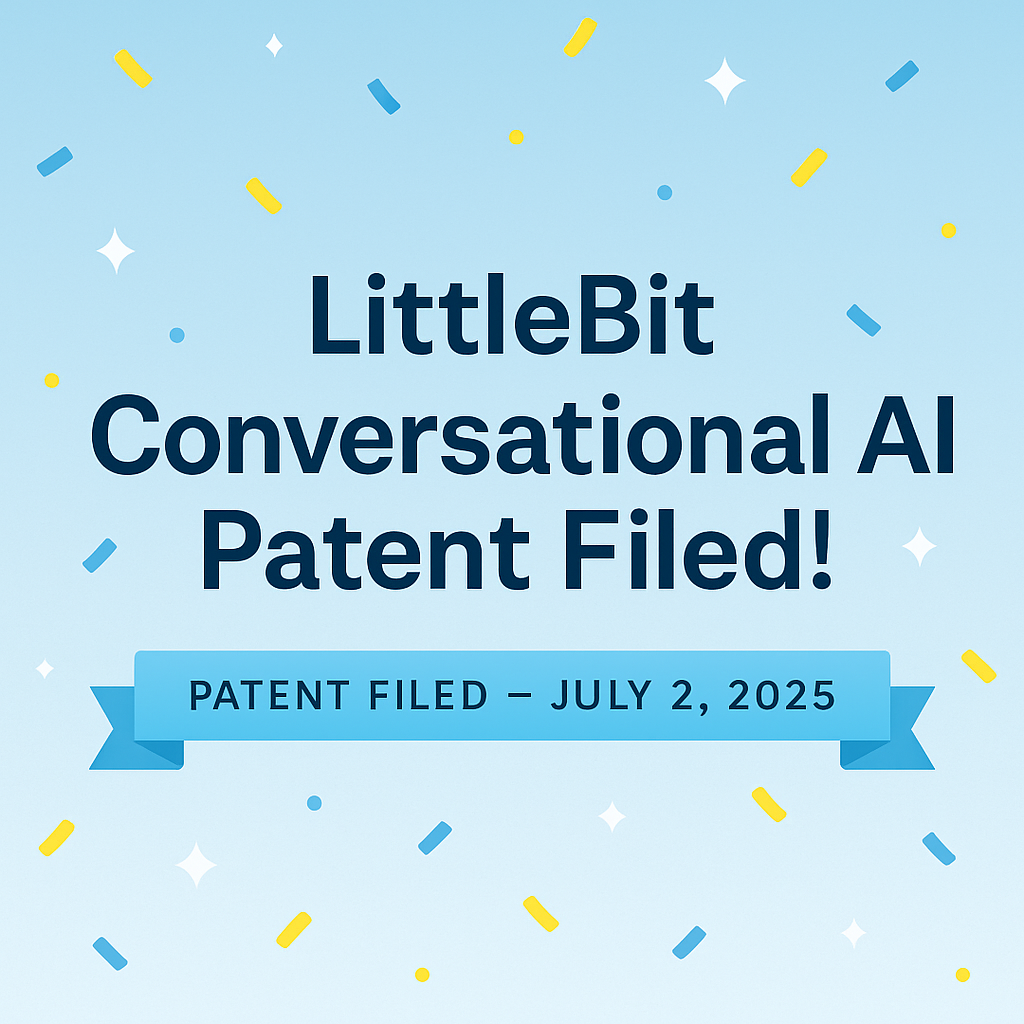
We’re excited to share that the LittleBit Conversational AI patent was officially filed on July 2, 2025!
This marks a big milestone in bringing our unique vision of a more personal, approachable AI assistant to life, and potentially through a native-TV app.
At the same time, we’ve started building out the microservices infrastructure that will power LittleBit’s ability to personalize each user’s experience.
🔍 Exploring Integration Options
We’re in the discovery phase of gathering potential integration points—so you can someday ask LittleBit for anything from weather updates to food suggestions to smart home controls—and get a seamless, friendly response every time.
Here’s an early look at some of the platforms and devices we’re considering:
Weather & Location
LoseIt! (nutrition tracking)
DoorDash & OpenTable (food and reservations)
Receipts (for tracking purchases)
Smart Home devices
Evernote & Car Apps
Reverse IP Geolocation (privacy-respecting location fallback)
Each of these will help us create microservices that make LittleBit more helpful and more personal over time.
🧠 Personal Templates, Weather Intelligence & Our First AI Connection
Today marked another milestone in the LittleBit journey — our first local prototype using React + ChatGPT, a working design system for personalized documents and diagrams, and a successful test of weather-based user prompts. But more importantly, we laid the foundation for custom user CSS, multi-modal integrations, and future data services that will power LB’s next sprint.
🎨 Personal CSS: A New Layer of Personalization
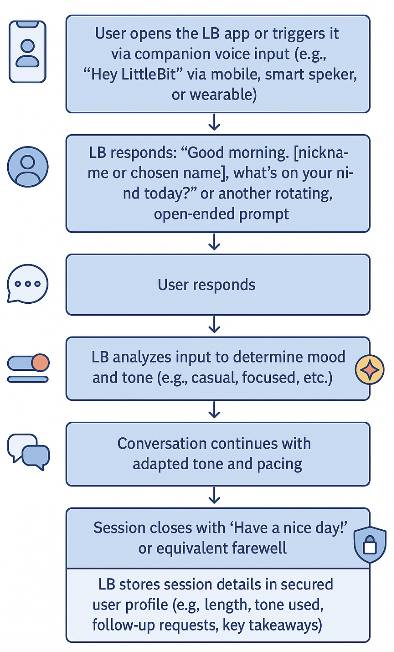
One of LittleBit’s key innovations is its ability to tailor outputs like Word docs or PowerPoint slides based on each user’s environment. This morning, we introduced:
🖥️ Operating system awareness (Mac, Windows, etc.)
📦 App version handling (e.g. PowerPoint 365 vs. Keynote)
🎨 Styling preferences (LB’s Carolina Blue for now since I’m the only user, centered text, no white fonts, etc.)
We call this the Personal CSS microservice — and it allows LB to produce formatted diagrams and documents that look right, feel familiar, and require no user tweaks.
We used it today to regenerate:
🧭 Architecture Diagram
🌅 Morning Chat Journey (see preview below)
📱 Multi-Device Flow
Each now follows our custom theme and renders beautifully on the MacBook (finally!).
⚙️ The First Working Prototype (React + Vite)
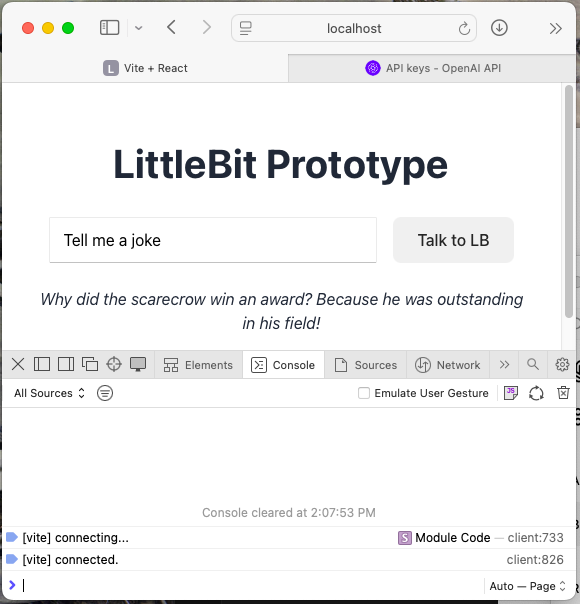
We launched our first working version of a local app that connects a UI button to ChatGPT. That might sound simple, but it represents the first live spark in the LB system.
Here’s what we did:
🧱 Installed Node.js + NPM: Tools that let us run JavaScript outside the browser and install packages.
🔐 Configured the .env file with our OpenAI API key.
😤 Hit a 429 Error despite a paid ChatGPT Plus plan.
Surprise: the $19.99 plan doesn’t cover developer APIs.
We added $10 of usage-based credit to fix it and cover testing — just like we had to do for the WordPress automation last week.
🌤️ “What’s the weather in Charlotte?”
With the ChatGPT connection working, we tested a sample user query — and were met with a chuckle-worthy 429 block. Still, it prompted us to add weather integration to our core feature list. Because what’s more personal than the weather?
Future versions of LB will include:
🌦️ Weather data tailored to tone and time of day
🍽️ Restaurant reservations via OpenTable or Resy
📆 Calendar events from Outlook or Google
💬 Mood-based response tuning
These integrations will help LB feel helpful in the moment, not just knowledgeable.
💻 Performance Note: Mac Running Hot?
During testing, the Mac slowed down noticeably while the dev server was active. Vite is fast, but hot module reloading and file watching can spike memory.
🧯 Pro tip: Close unused apps, stop the Vite server (Ctrl + C) when idle, and reboot if needed.
🐙 GitHub Ready for Action
We also set up our GitHub account this morning to start tracking project code, architecture diagrams, and component builds.
Starting tomorrow, we’ll begin the first integration sprint, laying the code structure to support:
📡 External API connectors
🔒 Microservices (CSS, tone tracking, personalization)
📊 Interaction logging for mood, tone, pacing
Expect our first public repo link soon for the open-source effort.
🛠️ Key Features & Learnings
We’re building:
🧠 A fully personalized experience based on OS, tone, and preferences
💬 A working UI app with ChatGPT integration
💰 A secure, budget-aware usage model for API calls
🧩 A microservices-first foundation that will scale to mobile, TV, and tablet
📅 Coming Tomorrow
We’ll start mapping the first integration sprint in GitHub, clean up some of today’s diagrams, and expand the prototype into a usable conversation shell.
We’ll also begin logging:
Session tone
Interrupt counts
Average response length
Follow-up request patterns
—
Jason Darwin Creator of LittleBit
P.S. And yes… LittleBit is already getting to know me a little bit — it told my favorite dad joke of all time in our first interaction:
“Why did the scarecrow win an award?” Because he was outstanding in his field.
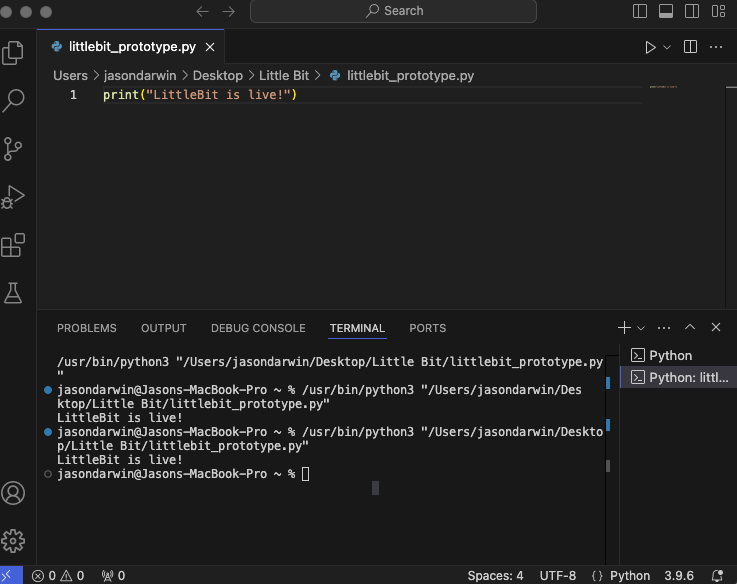
We’ve officially hit a major milestone: The LittleBit prototype is up and running.
It’s not public yet — and won’t be for a little while — but we’ve stood up the first working version of the assistant interface and confirmed the backend environment works. Right now, we’re testing how different devices (PC, tablet, mobile) interact with it, running early Python code, and validating voice and text workflows.
There’s no button to push for access yet, but it’s a big moment.
We’re not talking about it and making pretty workflow pictures anymore — we’re building it. The microservices are scaffolded. The assistant is live. And the groundwork for something real is happening right now.
🔗 Full Stack Flow Underway
With the basics working, we’ve started tackling the real puzzle:
How do we make publishing and interaction feel natural across devices?
Today we:
Validated the code environment for LittleBit’s assistant logic
Connected Jetpack to our Facebook and Instagram business pages (auto-publishing is live!)
Ran real-time workflow tests from local development to blog and social publishing
We’ll soon have a place where anyone can try a morning chat and watch it learn their preferences over time.
🧠 Designing Personality + Modes
We’ve started defining four key conversation modes that shape how LittleBit interacts with you:
☀️ Morning Chat – Light, casual, and paced like a friend with coffee
🌙 Nightly Reflection – Wind down, review, plan for tomorrow
Each mode shapes tone, pacing, memory, and the type of questions LittleBit asks you.
🧱 Under the Hood
The current prototype runs on a lightweight Python backend, built inside Visual Studio Code, with live testing enabled through a local preview server.
The architecture uses modular microservices for core functions like:
Conversation mode switching
Interrupt logic (e.g., “stop” commands or pauses)
Device awareness (TV, mobile, voice, etc.)
And thanks to Jetpack, the assistant now auto-publishes blog content directly to WordPress, Instagram, and Facebook — making each daily post part of a connected, testable workflow.
Next steps? Testing real user interactions, layering in personalization logic, and eventually expanding input options (text, voice, SMS, etc.).
🎨 Oh, and the Logo…
We’ve even started sketching logo ideas!
Right now, the front-runner is a lowercase “littlebit” wordmark with a soft chat bubble shape and microphone — clean, friendly, and instantly recognizable. It’s just a draft for now, but it’s a small visual sign of what’s to come.
🚧 And We’re Still Just Getting Started
This is still pre-alpha. The Alpha UI isn’t final. The domain is still asklittlebit.com — but with a little bit of luck and a few friendly emails, that could change too.
We’re actively shaping the back-end architecture to accommodate voice recognition, real-time chat, secure user data ingestion, and multi-device transitions. Every day brings more real-world testing — yesterday we even ran a lab experiment with multi-user voice recognition in a single session.
🌀 P.S.
You may not see it yet, but behind the curtain, we’re brainstorming things like:
🤖 Voice-triggered TV apps (yep, no remote needed)
🛰️ Secure cloud ingestion of your health or grocery data to personalize chat
📟 Lightweight SMS integration
🧠 Mood + pacing detection by geography, time of day, etc.
We’re also exploring the best way to open-source key pieces of the project.
The goal?
A personal assistant anyone can tweak to match how they think and feel.



 Asklittlebit