How One Personal Assistant Got Its First Render and Drop Shot Right
🎾 A Morning Reset, and a Milestone Worth Watching
It was Breakfast at Wimbledon, and while the world watched Sinner claim his first Gentlemen’s Singles Trophy on the All England Lawn, I was eyeing a different baseline to hit: getting the first render of LittleBit’s brain live on GitHub – this thingamabob to share stuff outside your own computer.
I had already reset my systems. I had wiped scattered logic, retired half-baked branches, and started fresh. But this wasn’t just about file cleanup — it was about doing things intentionally, building the kind of assistant I’d actually trust. One that could learn. One that could remember.
⸻
🏗️ Sprint 1: Laying the Foundation
This sprint was about one thing: User Zero (U0).
If LittleBit is going to learn from others, GPT has to understand me first.
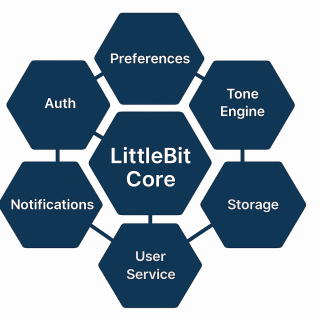
We started with the core traits:
– Interrupt Listener: Wake word configured (“stop”), responsiveness activated
– Tone Engine: Placeholder for emotional intelligence
– User Core: Nickname, time-of-day logic, opening prompt behavior
– Privacy Defaults: ‘Me Only’ mode, as the foundation for all future trust
– Memory Scaffold: Reference log created, early recall structure defined
This wasn’t a massive model rewrite — it was a clean render. Simple, functional, and built to scale.
⸻
🚀 The Push That Sealed It
After building locally, I did it the right way:
– Initialized Git (think native computer language like Unix) in the new littlebit-middleware-v0.2.0 folder
– Added a .gitignore to keep the clutter out
– Wrote a proper README.md (aka fancy txt file) to explain the milestone
– Configured GitHub token-based authentication (no password hacks here)
Then it happened:
To https://github.com/Adarwin2/littlebit-middleware.git
• [new branch] main -> main
Milestone pushed. First render complete.
This wasn’t just code moving to the cloud — it was a checkpoint in the journey of building something that remembers why it was built.
🔗 GitHub Repo: https://github.com/Adarwin2/littlebit-middleware
⸻
🗂️ From Memory to Method: The System Behind the Push
Once the code landed, I zipped it and dropped it into my archive:
littlebit-middleware-v0.2.0.zip → Middleware_Snapshots/
Then I turned to my second brain — Notion — and created a structured sprint board. Sprint 1 was locked. Sprint 2 already underway. Sprint 3 ready to define the long-term memory layers LittleBit will learn from.
Here’s what Sprint 1 looked like:
– ✅ U0 First Render Complete
– 🧪 Run memory reference test
– 🗂 Rebuild master memory file
– 📝 Write & publish blog post
– 🔁 Sync test across devices
– 🔐 Setup GitHub token
– 🧠 Archive zip to WD & Dropbox
No guessing. No scrambling. Just trail maps and task cards.
⸻
🥚 The UTF-8 Artifact (A LittleBit of Character)
Somewhere along the way, while dragging milestone notes into Notion, I stumbled onto a line filled with weird symbols:
Sprint 1 – Foundations & Reset ✅
Instead of treating it like an error, I kept it.
“It wasn’t a bug. It was proof this system remembers — even the details we don’t always mean to.”
Call it another of my first LittleBit Easter eggs. A nod to UTF-8, markdown quirks, and the delight in watching something you built get smarter, byte by byte, or as those bytes are concerned, eight LittleBits at a time.
⸻
🔮 What’s Next: From Render to Response to Recall
Sprint 2 kicks off with:
– Connecting the middleware to the front-end (React)
– Drafting the first starter prompt for memory recall
– Writing the next blog: “From Sparks to Structure: How the Brain Grows”
Sprint 3: Teaching LittleBit to actually remember — not just store data, but understand it.
We’re not just creating a digital interface, we’re building a core brain — one thoughtful commit at a time, understanding it cannot function without the heart and ultimately the soul.
⸻
🧠 Why This Matters
This project is personal. It’s not just a stack of JSON files or API endpoints.
It’s about creating something I trust — something others might too.
LittleBit isn’t trying to be the next viral AI. It’s trying to be the most personal, private, and intentional one.
We don’t need more bots that shout into the void. We need ones that whisper what matters — and remember it when we forget.
⸻
— Jason Darwin
Founder, LittleBit & Memory Matters
askLittleBit.com
⸻
P.S.
Still not sure if the ✅ in my README was a character encoding glitch…
or the first time LittleBit tried to say “good job.”
Either way — I’ll take it. ✅
Tags: #AI, #Automation, #BreakfastAtWimbledon, #CleanCode, #DigitalBrains, #FirstRender, #FounderStory, #FutureOfAI, #GitHub, #Innovation, #IntentionalDesign, #LifeWithAI, #LittleBit, #MemoryMatters, #MindfulTech, #NotionWorkflow, #PersonalAssistant, #PrivacyFirst, #ReactApp, #SprintPlanning, #StartupJourney, #Startups, #TechReset, #UTF8, #VersionControl, health

 Asklittlebit